
 Spring Hill Schools administrators provided the Board of Education with a detailed update March 23 on the progress, budget and design planning tied to the district’s Building Opportunity Bond 2025 projects, including the three elementary classroom additions and the upcoming Career and Technical Education (CTE) addition and commons expansion at Spring Hill High School.
District leaders reported that all three elementary additions remain on track for completion ahead of the 2026-27 school year, while planning for the high school expansion continues to move forward toward spring bidding.
The update also included revised cost estimates, project contingency use, and a first look at interior design concepts for the future CTE spaces and commons expansion.
Overall Bond Budget Update
Executive Director of Operations Marc Williams shared updated budget figures with the board, noting that as actual project numbers continue to come into focus, the district remains in a favorable overall financial position within the voter-approved $60 million bond authorization.
Williams reported that the current projected total bond budget, if estimates hold, would come in at approximately $54.54 million, which is about $5.46 million below the district’s overall bond authorization.
A major portion of the March update centered on revised projected costs for the Spring Hill High School CTE addition and commons expansion, which now include several scope items designed to better align the new construction with the existing high school space.
The district has budgeted $25 million for the CTE and commons portion of the bond. Updated estimates now place the combined project cost at approximately $26,038,899, which includes not only construction, but also furniture, technology, contingency and related project support costs.
The estimated breakdown includes:
CTE Addition: approximately $17,468,596
Commons Expansion: approximately $3,839,574
Greenhouse Replacement: approximately $334,881
Soft Costs and Furniture/Technology Support: approximately $4.3 million
Project Contingency: approximately $568,000
Williams told the board that the district also made the decision to price an upgrade that would extend the new commons flooring and lighting finishes into the existing commons space, creating a more unified and visually consistent student area rather than having two noticeably different adjoining spaces.
That scope adjustment is included in the updated estimate. Final construction pricing will ultimately depend on competitive bids, which are expected to go out in May. District leaders said they remain hopeful, based on prior bond work, that final bids could still come in below current estimates.
Elementary Additions Continue on Schedule
Williams also updated the board on the status of the district’s three elementary classroom additions at:
Spring Hill Elementary School
Prairie Creek Elementary School
Timber Sage Elementary School
He said all three projects continue to progress well and remain on schedule for use at the start of the 2026-27 school year.
District leaders also noted that Board of Education members are scheduled to receive an in-person project tour with contractor Newkirk Novak on April 6, which will provide an opportunity to see construction progress firsthand and ask project-specific questions on site.
Spring Hill Elementary School
At Spring Hill Elementary, construction crews have made significant progress on the new addition. Williams reported that the project has reached the point where all temporary windows have been installed and the electrical rough-in is complete.
He also said plumbing rough-in work was expected to be completed by the end of that same week.
The next major steps for the Spring Hill Elementary addition include:
Exterior masonry work
Insulation installation
Drywall preparation and installation
Williams noted that district technology and facilities staff had already walked the site to verify the placement of outlets, technology drops and infrastructure connections before walls are closed in. That review process is intended to help ensure classroom spaces are functional and future-ready before drywall installation begins.
Prairie Creek Elementary School
At Prairie Creek Elementary, the addition has also advanced into more visible vertical construction. Williams said crews are currently working on:
Interior framing
Electrical rough-ins
Plumbing rough-ins
Overhead ductwork
The next major milestones at Prairie Creek include:
Roofing work
Continued completion of electrical, plumbing and HVAC systems
Although photos included in the presentation were already slightly outdated by the time of the meeting, Williams said the visible progress on site has continued to move quickly and is becoming easier to see for community members driving by.
Timber Sage Elementary School
Timber Sage Elementary is tracking slightly behind Prairie Creek in the construction sequence, but still within expected scheduling windows.
Williams said the Timber Sage addition is currently focused on:
Steel work
Exterior structural framing
Roof truss installation
Roof deck work
The next phase for Timber Sage will include:
Exterior framing
Ongoing site progression toward enclosing the structure
Williams said Newkirk Novak continues to express confidence that all three elementary projects will be delivered on time and ready for district use before students return for the 2026-27 school year.
Contingency Update
As part of the March bond update, Williams also provided the board with a small contingency update related to unexpected site conditions at Timber Sage Elementary.
During excavation for the Timber Sage foundation, construction crews encountered additional subsurface conditions requiring extra rebar and labor to reinforce portions of the foundation.
That adjustment added $6,099 in project costs and will be covered using the bond contingency budget.
Even with that change, Williams said the district still retains approximately $496,000 in contingency funds across the three elementary addition projects.
Tariff and Security System Tracking
Williams also shared that district leaders continue to monitor two additional bond-related line items that have been discussed in prior updates:
Tariff exposure: approximately $100,000
Building responder system design work: approximately $3,000
Neither number changed from the previous board update, according to the presentation.
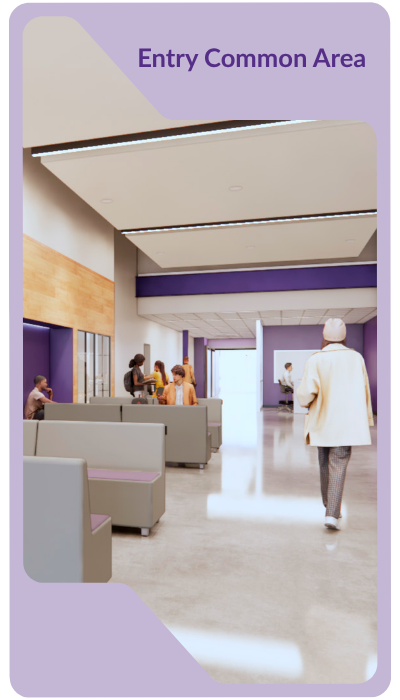
First Look at CTE and Commons Interior Concepts
A significant portion of the March 23 bond presentation focused on interior design planning for the future CTE addition and commons expansion at Spring Hill High School.
Williams said district staff, teachers, building administrators and DLR Group designers have met multiple times to review classroom functionality, hallway flow, furniture needs, cabinetry placement and visual design priorities.
He said one of the district’s goals was to create a space that feels more aligned with Spring Hill High School identity, rather than relying on older, more institutional finishes that currently exist in parts of the building.
Design Priorities Included:
Greater use of Spring Hill colors, especially purple
More wood-tone accents
Cleaner, more modern finishes
Increased use of polished concrete flooring
Stronger visual connection to student work and student programs
More flexible learning and collaboration spaces
CTE Addition Highlights
The new CTE addition is designed to expand and modernize student learning opportunities in several career pathway areas while also making those programs more visible to students throughout the building.
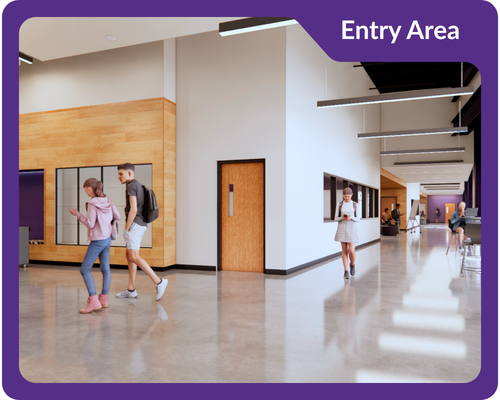
New Entry and Hallway Design
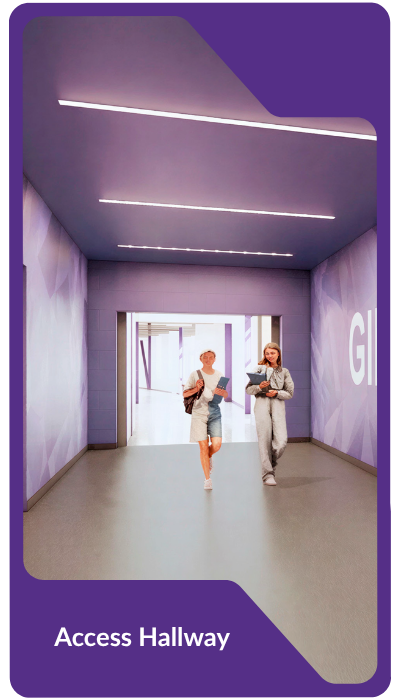
Renderings shown to the board included a new east-side entrance into the CTE addition from the rear parking lot. The space is designed with polished concrete flooring, school color accents and a hallway layout that will visually connect students to the new classrooms and eventually link back into the existing high school commons.
Williams said one of the intentional design choices was to create better visibility into CTE spaces so students can more easily see what is happening in those programs.
Agriculture and Construction Pathways
The new addition will include dedicated spaces for:
Agriculture classroom
Agricultural mechanics shop
Construction classroom
Construction shop
Each of these areas will feature interior windows from the hallway, allowing students and visitors to see inside the programs. Display ledges are also planned outside some of the classrooms and shops so students can showcase completed projects.
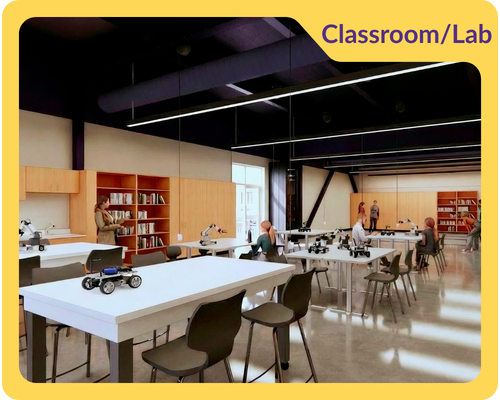
Robotics and Engineering
The new robotics and engineering classroom will include a flexible design that allows walls to open into a larger competition and project space. The layout is designed to support both instruction and hands-on team activities, including room for robotics fields and direct access to a 3D printing lab.
Williams said the space is intended to give students and staff greater flexibility for project-based learning and competitive preparation.
Health Science and CNA Flexibility
The health science portion of the addition will include multiple classroom spaces designed to better support instruction and hands-on learning.
One room will allow students to leave training tables set up permanently, rather than having to repeatedly set up and tear down equipment between class periods, which is currently a limitation in the existing facility.
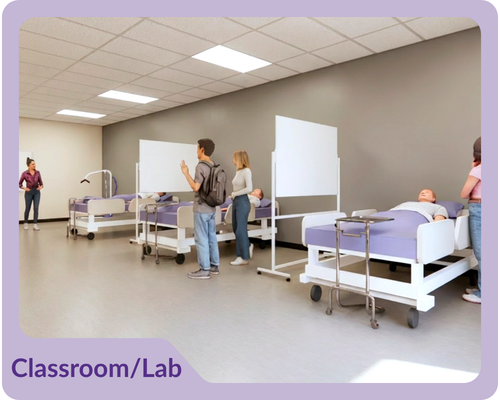 Another health science classroom is being designed with enough flexibility to potentially support a future Certified Nurse Aide (CNA) instructional setup if the district chooses to implement or expand that opportunity. That room would be able to accommodate the equipment and bed space necessary for that type of programming.
Commons Expansion Highlights
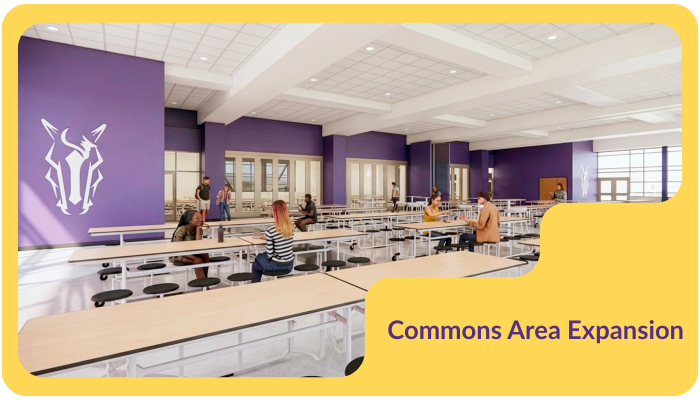
The board also reviewed interior concepts for the new commons addition, which is intended to improve student gathering space, flexibility and event functionality.
Williams said the expanded commons area is being designed to function as both:
a larger daily student lunch and collaboration space
a more flexible after-school and event-use area
Flexible Walls and Multi-Use Functionality
One of the major design features in the new commons is the use of movable wall systems, which will allow the district to:
open the existing and new commons into one large connected space
close portions of the area for smaller events or activities
divide the space into multiple presentation or gathering zones
The district is also exploring technology that would allow multiple display screens in the space to be used simultaneously or independently depending on the event or need.
Cheer Storage and Student Use
The design also includes dedicated storage space intended to help solve a current high school need: the storage of cheerleading mats and related equipment, which are currently stored in more open or less ideal spaces.
Williams said the addition should improve both organization and functionality while creating a cleaner overall student environment.
Commons Lighting and Flooring Upgrades
As discussed earlier in the presentation, the district is also planning to extend certain new finishes into the existing commons, including:
updated can lighting
new uniform flooring
Williams said the goal is to avoid a visible divide between the new and existing commons spaces and instead create a cohesive student-centered environment throughout the full area.
Board Questions Focused on Cost and Long-Term Use
Board members asked several questions during the bond update presentation, particularly around:
whether all project estimates shown were fully loaded costs
whether the district remains on schedule
whether the greenhouse replacement cost reflects upgraded systems and utilities
how certain interior storage and use features will function in practice
Williams confirmed that the project totals presented include both construction and related soft costs, and he reiterated that district leaders continue to feel positive about both schedule and budget direction at this stage of the work.
What Comes Next
The next major bond milestones expected in the coming weeks include:
Continued visible construction progress at all three elementary additions
Board and administrative project tours on April 6
Continued refinement of CTE and commons plans
Preparation for May bidding on the high school addition and commons expansion
District leaders said the bond work remains on a strong path and that future updates will continue to focus on construction progress, cost tracking and project transparency as the district moves deeper into the construction cycle.